Have you ever wondered why your wallet feels lighter after a credit card spree?
Research shows that people spend 12-18% more with credit cards than with cash.
This isn't just about convenience; it's rooted in how our brains react to plastic versus paper.
By understanding these psychological triggers, you can make smarter financial choices and avoid debt pitfalls.
The Brain on Credit: Reward vs. Pain
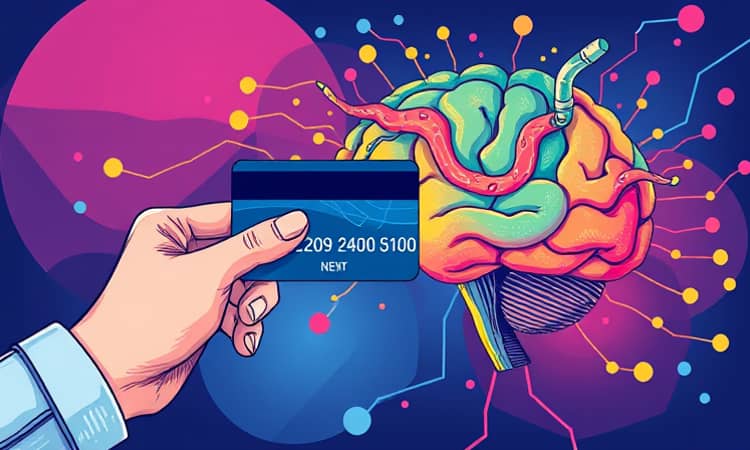
Credit cards activate the brain's reward center, known as the striatum.
This releases dopamine, creating anticipation of pleasure and motivating spending.
In contrast, cash payments light up the insular cortex, which processes pain.
This "pain of paying" acts as a natural brake on our expenditures.
With cards, that pain is diminished, leading to looser purse strings.
Why We Spend More: The Science Behind It
Studies using fMRI scans reveal that credit card cues alone trigger reward networks.
This sensitization occurs through reinforcement, similar to addiction patterns.
Immediate gratification from swiping is followed by delayed bills, fostering habits.
Payment decoupling makes future spending feel less painful than present cash outlays.
As a result, consumers buy higher-priced items and give larger tips.
- Electronics and vacations become more appealing.
- Impulse buys surge without the tangible loss of cash.
This behavioral shift has contributed to rising household debt over time.
Emotional Triggers: What Drives Our Purchases?
Our spending is often driven by emotions rather than logic.
Common triggers include stress, celebration, boredom, and social pressure.
For instance, a stressful day might lead to comfort buys like new clothes.
Celebrations can justify splurges on expensive dinners or gadgets.
- Stress: Leads to retail therapy for temporary relief.
- Boredom: Fuels online shopping sprees for entertainment.
- Social pressure: Encourages purchases of status items to fit in.
These emotional drivers are amplified when using credit cards due to reduced friction.
Real-life examples show how these effects play out daily.
A restaurant bill planned at ₹1,500 can balloon to ₹2,800 with extras.
This happens because the lack of immediate pain focuses our minds on pleasure.
The Lure of Rewards: Points, Miles, and FOMO
Rewards programs exploit our psychological biases to encourage spending.
Points and miles create a fear of missing out, or FOMO, driving overspending.
This "points pursuit" mindset can make debt feel less dangerous.
Cards designed for specific uses, like dining or gas, condition different appetites.
- Travel rewards might justify unnecessary flights.
- Cashback offers can lead to extra purchases just to earn points.
This hijacks deductive reasoning, clouding our judgment about financial risks.
Consequences: Debt, Stress, and Addiction
Overspending with credit cards has serious negative impacts.
It can lead to mounting debt, lower savings, and financial insecurity.
The repeated dopamine hits from swiping form habits akin to addiction.
This shopping addiction risk increases with frequent card use.
- Debt accumulation causes long-term stress and anxiety.
- Mental gymnastics rationalize overspending despite clear dangers.
Understanding these consequences is the first step toward mitigation.
Individual Differences: Tightwads and Spendthrifts
Not everyone reacts to credit cards in the same way.
Tightwads have high pain sensitivity and spend less with cash but are swayed by cards.
Spendthrifts overspend regardless of the payment method used.
Pessimists tend to resist gamification better than optimists.
Recognizing your own tendencies can help tailor your spending strategies.
- If you're a tightwad, be extra cautious with card limits.
- Spendthrifts may need stricter budgeting tools.
This self-awareness empowers you to make conscious financial decisions.
The Digital Age: Contactless and Frictionless Spending
Modern payment methods like contactless taps amplify psychological effects.
Sounds and animations provide instant confirmations that boost reward sensations.
This removes friction compared to cash, making spending feel effortless.
Digital enhancements can lead to habit formation without visual cues.
As technology evolves, it's crucial to stay vigilant about these influences.
Taking Control: Practical Strategies for Smarter Spending
You can counteract credit card psychology with proactive measures.
Start by tracking expenses via notifications to restore the "pain of paying."
Identify your emotional triggers and develop coping alternatives.
Use cash for discretionary spending to increase awareness.
- Set up alerts for every transaction to monitor real-time spending.
- Differentiate cards by category, such as one for essentials only.
- Practice mindfulness before purchases to assess real needs.
Experiments show that simply switching to cash can reduce spending dramatically.
By implementing these strategies, you harness the power of awareness.
Credit cards don't have to control your financial destiny.
With knowledge and tools, you can enjoy their benefits without the pitfalls.
Embrace this understanding to build a healthier relationship with money.
Your brain might be wired for rewards, but your choices can rewire your habits.