
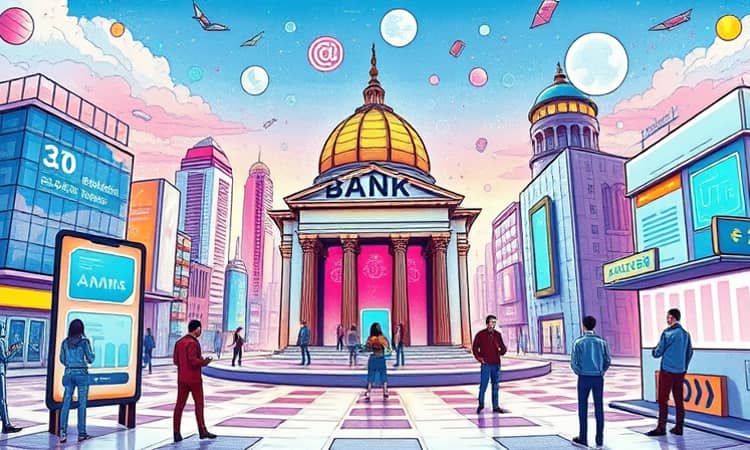
The world of banking is no longer confined to brick-and-mortar branches; it is evolving into a dynamic, digital-first ecosystem.
With digital banks worldwide projected to generate trillions in income, understanding these changes is crucial for everyone.
This shift promises greater convenience, lower costs, and personalized services that can transform how we manage money.
The Rise of Digital Banking
Digital banking is expanding at an unprecedented rate, fundamentally altering the financial landscape.
By 2025, digital banks are expected to generate a net interest income of $1.61 trillion, showcasing immense growth potential.
China leads this charge, with forecasts of $528.8 billion in 2025, highlighting global dominance.
Consumer adoption is skyrocketing, with over 76% of American customers now using mobile banking apps regularly.
This trend is fueled by the closure of physical branches, averaging 1,646 per year since 2018 in the US.
- Digital banking accounts total 1.75 billion, processing $1.4 trillion annually.
- Banks embracing digital transformation see 20%–40% reductions in operating costs.
- More than $3 trillion in deposits have moved into fintech-led investing platforms.
These statistics underscore a seismic shift toward digital-first finance.
Core Technologies Driving Change
Innovation in banking is powered by advanced technologies that enhance efficiency and user experience.
Artificial Intelligence and Machine Learning are at the forefront, with 70% of commercial banks adopting AI in core functions.
These tools enable personalized interactions and robust fraud detection systems, improving security and service.
Agentic AI represents a leap forward, automating multi-step tasks like loan processing without human intervention.
- AI applications include chatbots, virtual assistants, and data-driven risk assessment.
- Blockchain technology streamlines cross-border payments and increases transparency.
- Cloud computing offers scalability, better security, and faster deployment.
- Robotic Process Automation automates repetitive tasks, boosting productivity.
- Data Analytics provides actionable insights from vast customer datasets.
Real-time APIs and tokenized assets further revolutionize how transactions are handled, enabling instant settlements.
Key Trends for 2026
Looking ahead, several trends will define the banking experience, making it more integrated and intelligent.
Digital-first consumer behavior is pervasive, with 61% of consumers preferring digital banking across generations.
Embedded finance consolidates services with lifestyle needs, especially among younger users who seek seamless experiences.
Voice banking and conversational AI are becoming sophisticated, enhancing customer engagement through natural interactions.
- Augmented Reality transforms financial visualization and decision-making.
- Super Apps unify financial and lifestyle services into single platforms.
- Unified digital experiences ensure smooth, always-on access across channels.
- Real-time analytics provide visibility into payments and liquidity instantly.
- AI-driven orchestration unifies data, personalization, and payments.
Financial wellness is emerging as a core differentiator, with banks offering coaching and transparency to build trust.
The Power of Data and Personalization
Data is the lifeblood of modern banking, enabling hyper-personalized services that cater to individual needs.
66% of consumers are willing to share financial data, driven by the promise of better insights and confidence.
Users of data-backed fintech apps report feeling more confident in their financial lives, highlighting the value of personalization.
However, many institutions still struggle, scoring just 50 out of 100 on data utilization, indicating room for improvement.
This table illustrates how key technologies translate into tangible benefits for both banks and customers.
Navigating the AI Divide
The rapid adoption of AI is creating a divide between leading and lagging banks, with competitive pressure intensifying.
Digital-only challengers like Chime have captured 13% of new checking accounts, showcasing their market disruption.
Successful banks are shifting to product-based approaches with cross-functional teams, fostering innovation from within.
Cultural transformation deserves as much attention as technology, empowering employees to make quick decisions.
- Fintech partnerships are essential rather than viewing them as competition.
- AI-driven risk models and predictive workflows automate compliance and monitoring.
- Sustainability and ESG integration are becoming growth engines, not optional add-ons.
- Cybersecurity tools are non-negotiable, addressing rising fraud and geopolitical risks.
Banks must embrace these strategies to stay relevant and competitive in a fast-evolving landscape.
Practical Steps for the Future
To thrive in this new era, both consumers and financial institutions can take actionable steps to leverage innovations.
For consumers, adopting digital tools can enhance financial management and provide real-time insights into spending habits.
Engaging with data-backed apps allows for personalized advice, helping build long-term wealth and confidence.
- Explore embedded finance options for integrated services in daily life.
- Use voice banking features for convenient, hands-free transactions.
- Leverage AR tools to visualize investments and financial goals.
- Stay informed about tokenized assets and digital currencies for future opportunities.
- Prioritize banks with strong cybersecurity and fraud protection measures.
For banks, investing in AI and cloud infrastructure is critical to reducing costs and improving scalability.
Fostering a culture of innovation through employee empowerment and partnerships can drive sustained growth.
By focusing on financial wellness as a core offering, institutions can build deeper customer relationships and loyalty.
The future of banking is bright, filled with opportunities to create more accessible, efficient, and personalized financial experiences for all.