
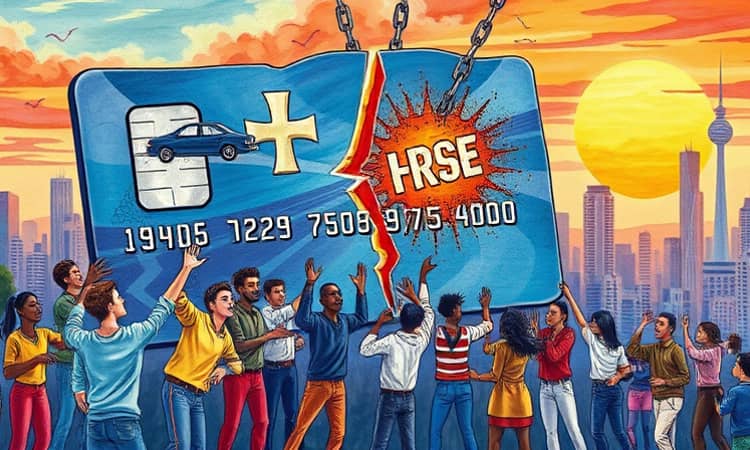
In January 2026, the United States reached a staggering record $1.21 trillion in credit card debt, a peak that signals a deepening financial crisis.
This immense figure is not driven by frivolous spending but by necessity, with 73% of debt tied to essentials like car repairs, medical bills, and routine living costs.
Such statistics force us to confront the ethical dimensions of a system where debt becomes a lifeline for survival.
As we explore this issue, it becomes clear that credit card debt is not just a personal finance problem but a reflection of broader societal challenges.
The journey to understand it is about human dignity, fairness, and the path to a more just financial future.
The Alarming Scale of Credit Card Debt
The numbers paint a vivid picture of financial strain across the nation.
Total credit card debt has soared to unprecedented levels, with projections indicating it may stabilize but remain high.
Key metrics reveal the extent of the burden on households and individuals.
This table underscores the massive financial pressure facing Americans today.
Beyond the totals, the average household debt hovers around $10,995.
Interest rates exacerbate the problem, with median APRs at 25.3%.
This makes it difficult for many to escape the debt cycle.
Delinquency rates, while decreasing slightly, still indicate widespread struggles with repayment.
- Total debt reached $1.21 trillion in early 2026, with minor variances in other reports.
- Average per cardholder with unpaid balances is $7,886, up from previous years.
- Usage statistics show 81% of U.S. adults have at least one credit card.
- Balances reveal that 46% carry a balance, and 22% make only minimum payments.
These figures highlight a system in crisis.
The high interest rates compounding debt create a vicious cycle for those already struggling.
Who Bears the Burden? Generational and Demographic Insights
Credit card debt is not evenly distributed; it varies significantly across generations and regions.
Generational data shows that every age group from Gen Z to Boomers has seen increases in balances over the past three years.
- Gen X carries the highest average balance at $9,600, reflecting mid-life financial pressures.
- State variations reveal declining credit scores in areas like Missouri and Georgia.
- Stable states like Utah benefit from lower debt and better spending habits.
- Middle-income households have seen an 18% increase in credit card reliance for everyday expenses.
These trends highlight how economic factors and life stages intersect to shape debt levels.
For instance, inflation persisting above target rates has forced many to use credit cards as a safety net.
Unemployment projections and emergency expenses further compound the issue.
Medical bills lead the charge in unexpected charges, driving debt accumulation.
The Root Causes: From Essentials to Economic Pressures
Understanding why debt accumulates is crucial for addressing it ethically.
The primary driver is not luxury spending but essential living costs, accounting for 73% of debt.
- Car repairs, medical bills, and home maintenance are common triggers.
- Limited savings and unexpected emergencies push people toward credit.
- Economic factors like persistent inflation reduce purchasing power.
- Post-pandemic volatility adds to the financial uncertainty.
This shift from discretionary to necessary spending raises questions about systemic support.
When credit becomes the only option for covering basics, it points to failures in wage growth.
The compounding effect of high interest rates makes it even harder to climb out of debt.
Systemic failures in wage growth leave many with no other choice but to borrow.
Ethical Quandaries: Predatory Practices and Inequality
The ethics of credit card debt revolve around fairness, responsibility, and social justice.
High interest rates, often exceeding 25%, can be seen as predatory lending practices that trap vulnerable populations.
- With 35% of debtors expecting to carry balances indefinitely, the cycle of debt seems endless.
- Minimum payment cultures enable perpetual interest accrual.
- This benefits issuers at the expense of consumers.
- Homeowner privilege allows some to access lower rates through cash-out refinances.
- Renters face higher costs, exacerbating inequality.
This creates a stark inequality where those with assets have escape routes.
Others do not, leading to deeper socio-economic divides.
Delinquency rates in certain states reflect these disparities, limiting opportunities for recovery.
The ethical duty of financial institutions to prevent harm is often balanced against profit motives.
Economic policies, such as Fed rate cuts, can help, but they may not reach those most in need.
Social impacts from credit score declines further entrench poverty cycles.
Pathways to Relief: Strategies and Solutions
Despite the challenges, there are practical steps individuals and society can take to manage and reduce debt.
For qualified homeowners, cash-out refinances offer a lifeline by converting high-interest debt to lower mortgage rates.
- This strategy can provide significant savings, but it requires careful consideration.
- Paying off balances in full to avoid interest is a simple yet effective tactic.
- Building relationships with lenders can improve financial health.
- Practicing responsible credit use is key to long-term stability.
On a broader scale, policy changes and systemic reforms are needed to address the root causes.
Tighter underwriting standards by lenders can prevent over-indebtedness.
Encouraging savings through financial education reduces reliance on credit.
Advocacy for fair interest rates helps level the playing field.
Strategic moves as balances stabilize can empower individuals to take control.
Conclusion: A Call for Responsibility and Reform
The ethics of credit card debt demand a multifaceted approach.
It combines personal responsibility with systemic change for a more equitable future.
As we move forward, recognize that debt is often a symptom of larger economic issues.
By fostering financial literacy, we can empower people to make informed choices.
Advocating for equitable policies ensures that credit serves as a tool for empowerment.
Let this be a catalyst for reflection and action in our financial lives and communities.
Together, we can work towards a system where fairness and justice prevail over profit and exploitation.