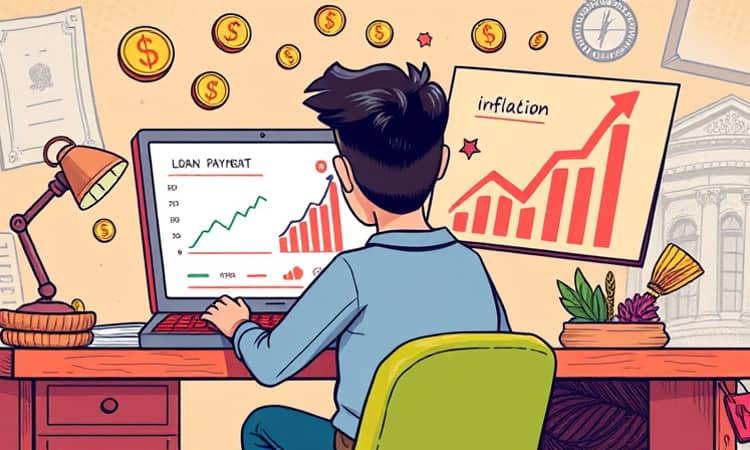
Inflation isn't just a buzzword; it's a powerful economic force that directly affects how much you pay for loans every month.
When prices rise steadily, the real value of money erodes, prompting lenders to adjust their strategies to protect their investments.
This means that your mortgage, auto loan, or personal debt could become more expensive, straining your monthly budget without warning.
By grasping this connection, you can take proactive steps to mitigate risks and make informed borrowing decisions.
The Direct Link Between Inflation and Interest Rates
Inflation erodes the purchasing power of money over time, making future loan repayments less valuable to lenders.
To compensate for this loss, financial institutions often raise interest rates on new loans, ensuring they maintain profitability.
This mechanism is fundamental, as it shifts the cost burden onto borrowers, affecting everything from home mortgages to credit cards.
For example, if inflation surges, lenders might increase rates preemptively, based on economic indicators like the Consumer Price Index.
- Higher inflation leads to elevated interest rates to offset reduced real returns.
- Fixed-rate loans remain stable post-origination, but new loans see immediate hikes.
- Adjustable-rate loans reset based on inflation-linked indexes, adding unpredictability.
- Lenders monitor wage growth and energy prices to anticipate rate adjustments.
This dynamic means that borrowers must stay vigilant, as even small rate changes can have significant long-term impacts.
How the Federal Reserve Influences Your Loan Costs
The Federal Reserve plays a pivotal role in controlling inflation through monetary policy, which indirectly affects loan rates.
By raising the federal funds rate, the Fed makes borrowing more expensive, aiming to cool down an overheating economy.
This action ripples through financial markets, pushing up mortgage rates via influences on mortgage-backed securities.
Investors demand higher yields on these securities when inflation expectations rise, further tightening credit conditions.
- The Fed uses tools like open market operations to adjust short-term rates.
- Changes in the funds rate impact auto loans, credit cards, and personal loans similarly.
- Market expectations based on CPI data can lead to proactive lender pricing.
- Historical parallels, such as the 1980s spikes, show rapid rate hikes in response to inflation.
Understanding the Fed's role helps borrowers anticipate rate movements and plan their finances accordingly.
The Impact on Monthly Payments and Affordability
Higher interest rates translate directly into larger monthly payments, reducing your borrowing power and housing affordability.
For instance, a 1% increase on a $400,000 mortgage can add around $200 to your principal and interest payment each month.
This reduces overall affordability, especially when combined with rising home prices, making it harder for first-time buyers to enter the market.
Affordability metrics have worsened significantly, with the income needed to buy a median home rising by 59% since 2019.
This table illustrates how even moderate rate hikes can lead to substantial payment increases, shocking household budgets and forcing financial adjustments.
Moreover, the lock-in effect reduces housing inventory as homeowners with low rates hesitate to sell, exacerbating affordability issues.
Effects on Different Types of Loans
Not all loans are affected equally by inflation; understanding the differences can help you choose the right borrowing option.
Fixed-rate mortgages offer stability by locking in rates for the loan's duration, protecting you from future increases.
In contrast, adjustable-rate mortgages reset periodically based on indexes like SOFR, which often rise with inflation.
This means ARMs can become more expensive over time, adding uncertainty to your financial planning.
- Auto loans and personal loans follow similar patterns to mortgages, with rates tied to Fed policy.
- Credit card rates are linked to the prime rate, which moves with the federal funds rate.
- Student loans may have fixed or variable rates, impacting repayment during inflationary periods.
- Business loans see higher costs as lenders price in inflation risks, affecting small enterprises.
By assessing your loan type, you can better prepare for potential rate changes and manage your debt effectively.
Historical and Recent Examples of Inflation's Impact
History provides valuable lessons on how inflation can dramatically alter loan payments and economic behavior.
The post-2021 inflation spike drove mortgage rates from 2.65% to 7.79%, causing monthly payments on a $400,000 loan to soar by $1,265.
This historical surge in rates highlights the rapid changes that can occur, catching many borrowers off guard.
In the 2020s, median home payments doubled from around $1,100 to $2,207, adjusted for inflation, straining household incomes.
- The 1980s saw similar spikes, with rates reaching double digits to combat high inflation.
- Recent trends show a correlation between inflation and home price appreciation, beyond just rate effects.
- Wage growth has lagged behind inflation in many cases, making repayment more challenging.
- Geopolitical events, like oil price shocks, can amplify inflationary pressures and loan costs.
Learning from these examples emphasizes the importance of monitoring economic indicators and planning for volatility.
Broader Market and Behavioral Impacts
Inflation doesn't just affect individual borrowers; it reshapes entire markets and lending behaviors.
Stricter lending standards emerge as lenders become more cautious, reducing access to credit for some consumers.
Proactive pricing based on inflation expectations means rates might rise even before official Fed announcements.
This reduces buyer qualification rates, as higher payments make it harder to meet debt-to-income ratios.
- Inventory levels drop due to the lock-in effect, limiting housing options for buyers.
- Investor demand for mortgage-backed securities fluctuates, influencing rate availability.
- Consumer confidence can wane, leading to reduced spending and economic slowdowns.
- Lenders may offer creative products, like hybrid ARMs, to attract borrowers in volatile markets.
These broader impacts underscore the interconnectedness of inflation, lending, and economic health.
Looking Ahead: 2026 Projections and Strategies
Projections for 2026 suggest potential inflation rebounds of 3-6%, which could push 30-year fixed mortgage rates to an average of 6.1% with highs around 6.5%.
Current rates as of January 2026 are approximately 6.16%, with elevated MBS spreads indicating ongoing market tension.
This outlook means borrowers should prepare for continued volatility and consider locking in fixed rates early to secure stability.
Refinancing opportunities may emerge if rates drop, offering a chance to reduce payments if inflation cools.
- Monitor key signals like wage growth, energy prices, and CPI reports to anticipate rate moves.
- Consider fixed-rate loans for long-term predictability, especially in uncertain economic climates.
- Build emergency savings to cushion against payment increases or income fluctuations.
- Explore government programs or lender incentives that might ease borrowing costs during inflationary periods.
By staying informed and adaptable, you can navigate the challenges of inflation and protect your financial well-being.
Practical Steps to Protect Yourself from Rising Payments
Empower yourself with actionable strategies to mitigate the impact of inflation on your loan payments.
First, assess your current loans and identify which are fixed or variable, prioritizing those at risk for rate increases.
Next, create a budget that accounts for potential payment hikes, setting aside funds to cover unexpected costs.
This proactive financial planning can prevent defaults and reduce stress during economic shifts.
- Lock in fixed rates on new loans when possible, especially for large purchases like homes.
- Refinance existing loans if rates decline, but weigh closing costs against potential savings.
- Increase your income through side hustles or career advancements to offset higher payments.
- Reduce discretionary spending to free up cash for loan obligations during inflationary times.
- Consult with financial advisors to tailor strategies to your specific situation and goals.
Taking these steps can transform inflation from a threat into an opportunity for smarter financial management.
Remember, knowledge is your best defense against economic uncertainty, allowing you to thrive even in challenging conditions.